01 Overview
What Mastro is
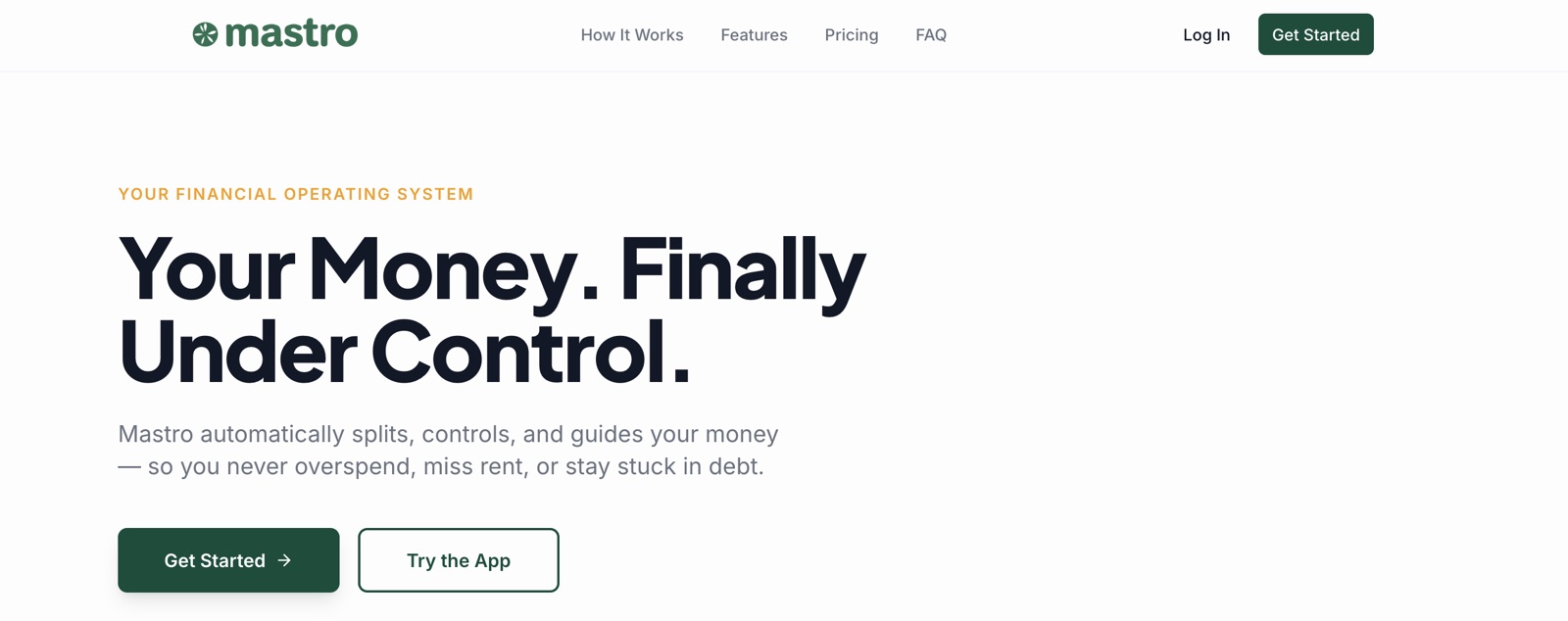
Mastro is not a budgeting app. It is the system that makes money behave, at home and at work. Users create pockets for rent, savings, giving and lifestyle, decide once how every naira should split, and from the next payment on, allocation runs on its own.
For businesses the same engine becomes budget lanes per department, role-based approvals, payroll and tax funded first, and runway alerts weeks before payroll is at risk. It runs on licensed Nigerian banking infrastructure; Mastro is software, not a bank.
02 The challenge
A bank app shows you the damage. Mastro helps you prevent it.
One pooled balance
Rent, savings and Friday night all draw from the same number, and the loudest need wins.
Discipline is manual
Staying on track means transfers, notebooks and mental maths against upcoming bills, every single month.
Hindsight, not foresight
Most people and most businesses find out late. Last month's numbers arrive next month.
Payroll competes with everything
In a business, payroll and tax sit in the same balance as marketing spend until the day they don't fit.
03 Who it's for
Designing for the people on every side
Salary earners
Give every naira a destination on payday, without thinking about it again.
Freelancers
Irregular income, steady discipline. Lean months stay covered.
Side hustlers
Keep hustle money separate and watch it grow into something real.
Businesses and finance teams
Budgets by department, approvals by role and an audit trail that writes itself.
04 Key decisions
What we learned, and what we decided because of it
Willpower runs out; rules don't.
Decide once at setup. Every incoming payment is split instantly on settlement by percentage, fixed or manual rules.
A balance is not an answer. People want to know what is safe to spend.
One clear safe-to-spend figure, always live, replaces the raw balance as the primary number.
Control that feels paternalistic gets switched off.
Limits can block or only warn. Mastro suggests reallocations, and the user stays the one who decides.
Owners run household and business money with the same instincts.
One mental model for both: personal pockets become business budget lanes on the same rules engine.
In fintech, trust is designed, not declared.
Licensing is disclosed plainly, every account is verified and every sensitive action needs multi-factor confirmation.
05 The solution
The product, screen by screen
Pockets
A pocket for every part of life, each with a rule that fills it.
Allocation rules
Percentage, fixed or manual, applied the moment money lands.
Safe to spend
A single live figure that already accounts for bills and goals.
Limits and alerts
Block or warn before overspending, at the strictness the user chooses.
Budget lanes
Per-department allocations, so spend in one lane never drains another.
Approvals and runway
Role-based approvals, an audit trail, and burn-rate and payroll-risk alerts.
Interface studies drawn with sample data.
06 Reflection
Software that holds the line.
The core design problem in Mastro is restraint: building a product that says no on the user's behalf without ever feeling like it has taken their money away from them.
The answer was to put every rule in the user's own words, show the reasoning behind every number and leave the final decision with them. The structure does the remembering; the person stays in charge.